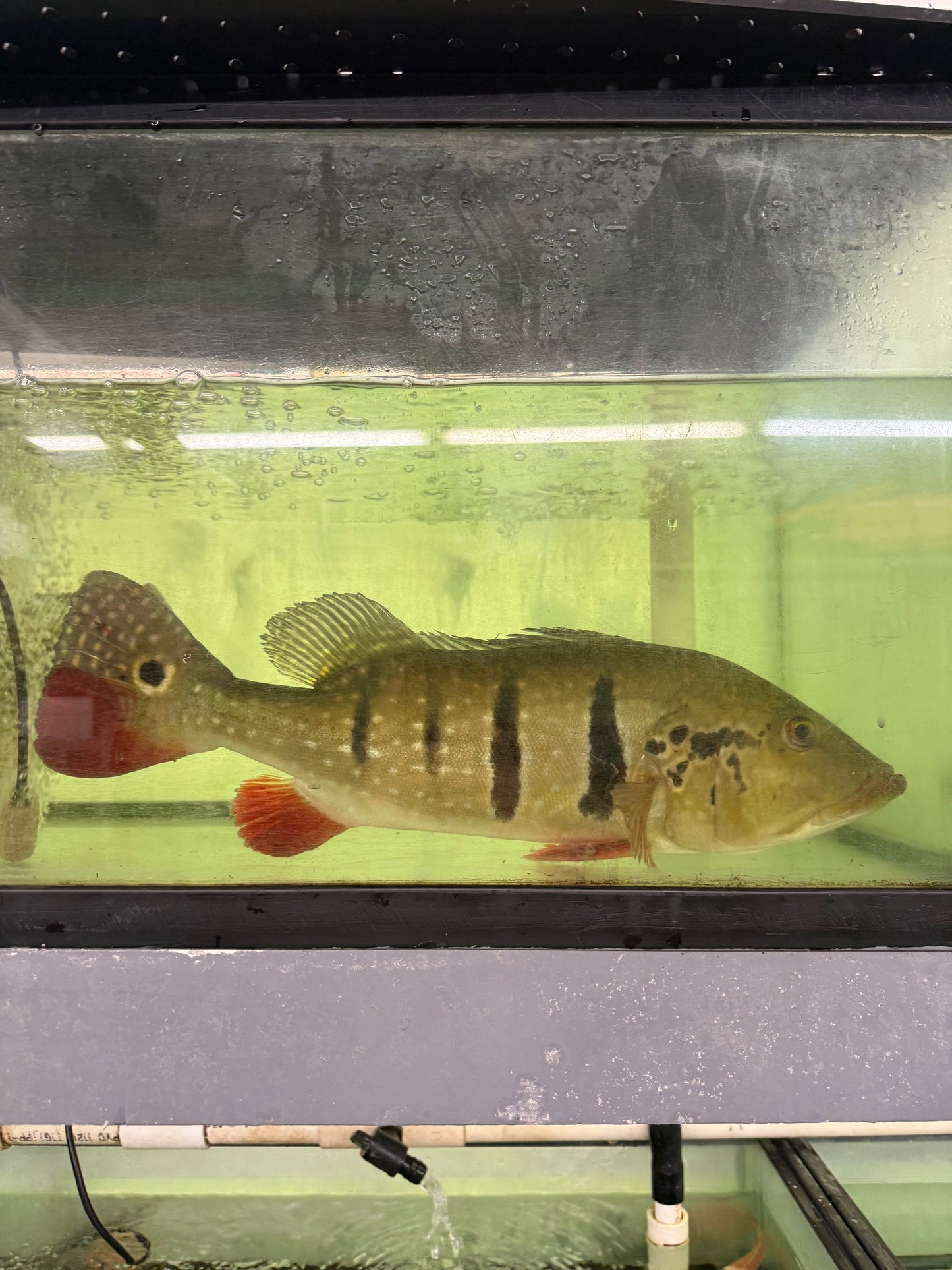
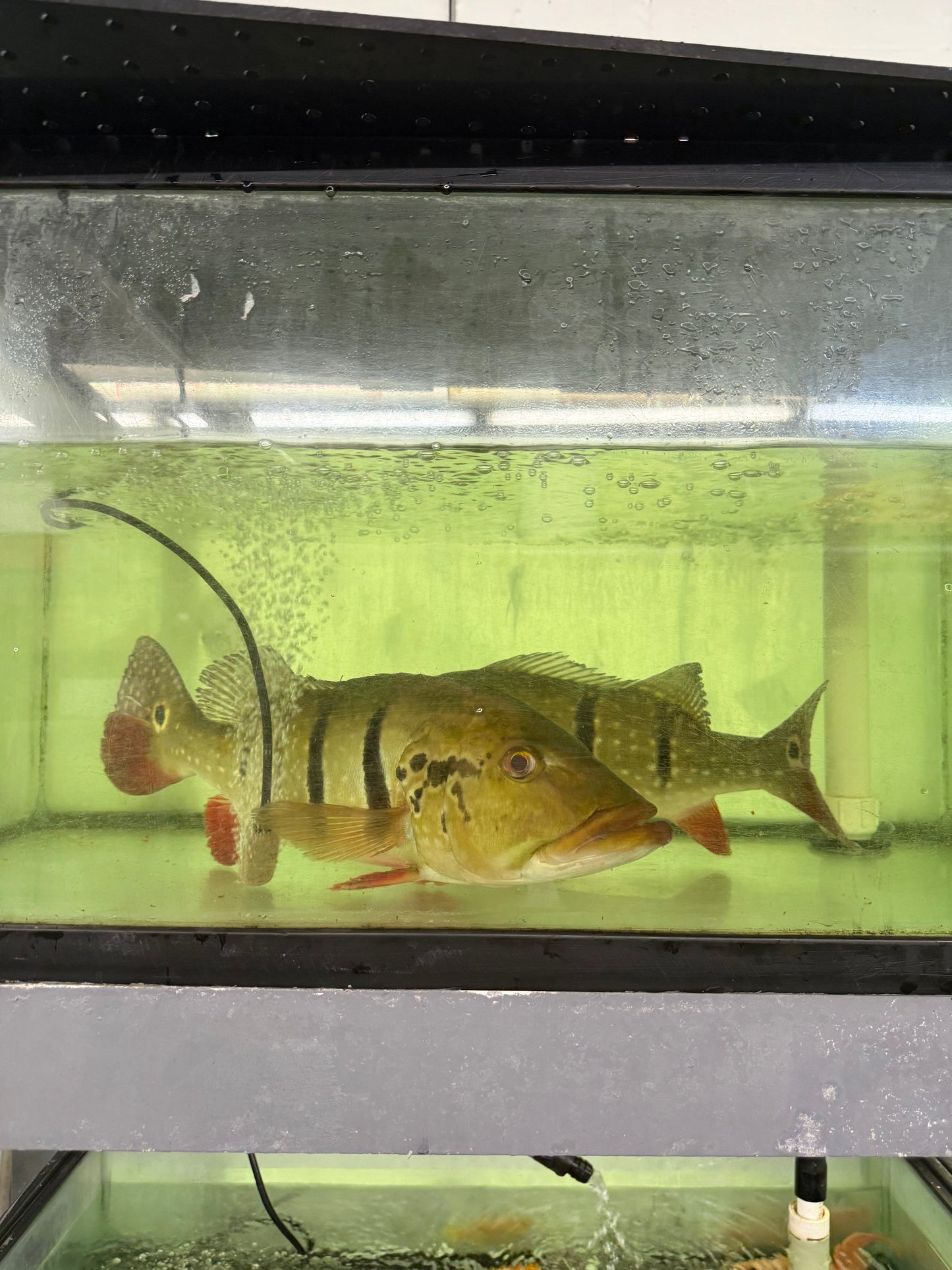
20” Temensis Peacock Bass
20” Temensis Peacock Bass
Rob's Aquatics Fish Shop
Couldn't load pickup availability
Text (239) 738-2420 for VIP drops and limited fish.
Share
About This Fish
About This Fish
20” Temensis Peacock Bass – Majestic Freshwater Predator
The 20” Temensis Peacock Bass is a stunning centerpiece for experienced freshwater aquarium enthusiasts. Known for its striking coloration and dynamic behavior, this species is a favorite among hobbyists who seek a powerful and visually impressive fish. If you’re curious about the ideal conditions and care requirements for this species, read on to discover everything you need to know to keep your Temensis Peacock Bass thriving.
Size and Appearance
Reaching up to 20 inches in length, the Temensis Peacock Bass is one of the largest members of the Cichla genus. Its vibrant yellow and green body is adorned with black vertical bars and eye-catching orange accents, making it an unmistakable addition to any large aquarium. This fish’s muscular build and streamlined shape reflect its predatory nature, combining beauty with strength.
Temperament and Behavior
Temensis Peacock Bass are known for their assertive and territorial temperament. While they are generally not aggressive toward humans, they can display dominance toward other tank mates, especially smaller or less robust species. They are active hunters and require ample space to swim and explore. This species is best suited for hobbyists who have experience managing large, semi-aggressive cichlids.
Tank Size and Setup
Because of their size and activity level, a minimum tank size of 180 gallons is recommended for a single adult Temensis Peacock Bass. A larger tank of 220 gallons or more is ideal if you plan to keep multiple individuals or compatible tank mates. The aquarium should be decorated with sturdy rocks and driftwood to create hiding spots and territorial boundaries, but ensure plenty of open swimming space remains. A secure lid is essential as this species can be an agile jumper.
Water Parameters and Quality
Maintaining optimal water conditions is crucial for the health of your Temensis Peacock Bass. They thrive in freshwater with a temperature range of 78-86°F (26-30°C), a pH between 6.0 and 7.5, and moderate to soft water hardness. Regular water changes and efficient filtration are necessary to keep the water clean and stable, as these fish are sensitive to poor water quality.
Diet and Feeding
Temensis Peacock Bass are carnivorous and prefer a varied diet rich in protein. In the aquarium, offer high-quality pellets formulated for carnivorous fish, supplemented with live or frozen foods such as shrimp, small fish, and insects. Feeding twice daily in controlled amounts helps maintain their health without compromising water quality. This species' predatory instincts mean they will eagerly hunt live prey but avoid small fish tank mates that could become meals.
Compatibility and Community Considerations
Due to their size and temperament, Temensis Peacock Bass are best kept either singly or with other large, robust fish that can tolerate their semi-aggressive nature. Avoid small, docile species as they may be attacked or eaten. Suitable tank mates include large catfish, robust cichlids, and other similarly sized predatory fish. Always monitor interactions closely and be prepared to separate fish if aggression becomes an issue.
Unique Selling Points of the 20” Temensis Peacock Bass
- Striking coloration and bold patterns make it a visually captivating aquarium centerpiece.
- Impressive size and muscular build showcase the power of South American freshwater predators.
- Active and engaging behavior provides an exciting viewing experience.
- Relatively hardy when kept in proper conditions, rewarding experienced hobbyists.
- Offers a naturalistic predator-prey dynamic in a well-maintained large aquarium.
Whether you are upgrading your aquarium with a show-stopping centerpiece or expanding your collection of large cichlids, the 20” Temensis Peacock Bass offers a rewarding challenge. Its care demands encourage responsible fishkeeping and provide a glimpse into the fascinating biodiversity of South American freshwater ecosystems.
📦 Nervous about shipping? Watch how we safely pack and ship live fish